
Statement vs Question Face
The same signs can mean different things when the face changes. This is one of the fastest ASL grammar wins for beginners.
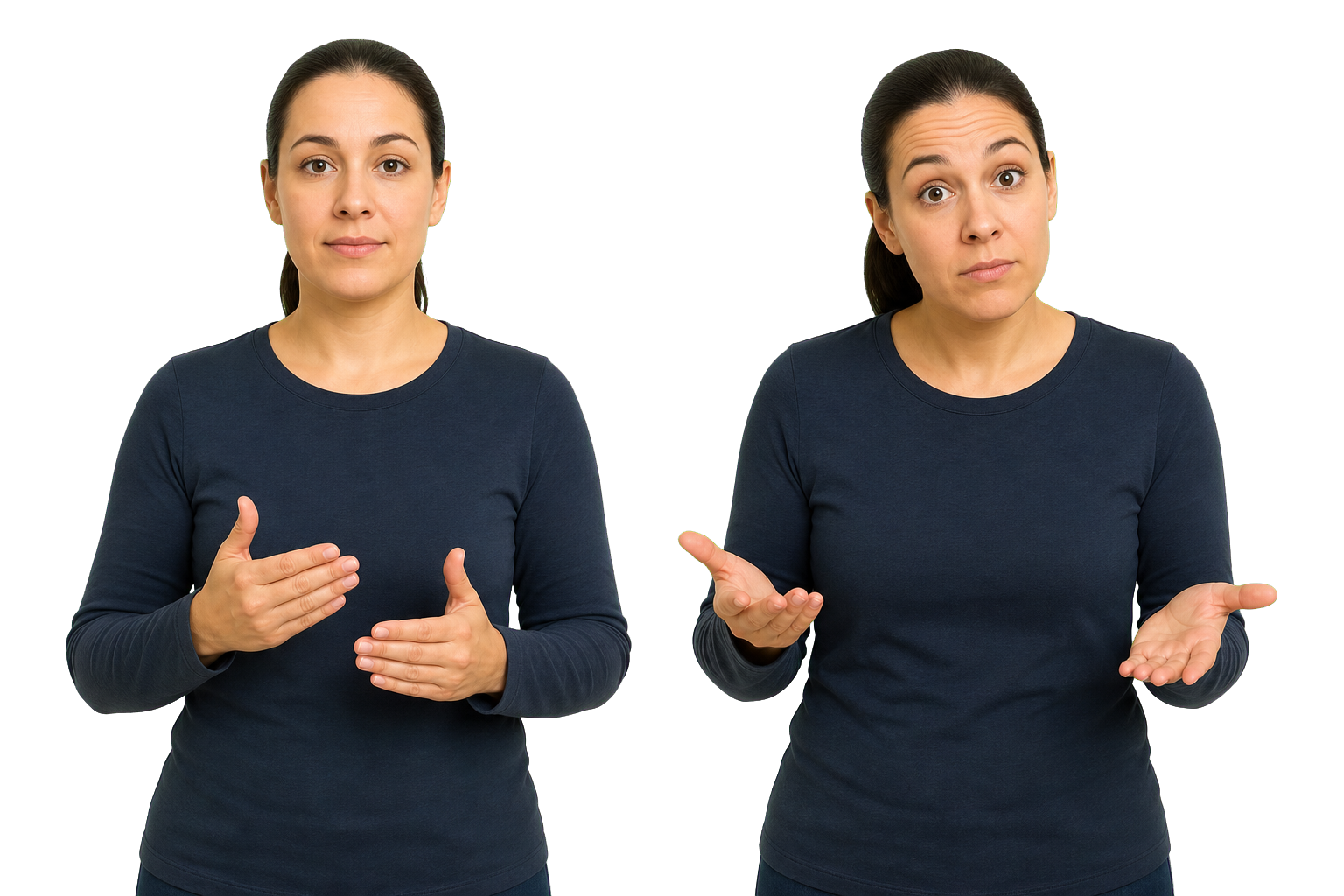
Learn It
Start with the simple version, then practice it with real signs.
A statement usually has a calm, neutral face.
A question needs a question face. For many beginner questions, that means raised or lowered eyebrows.
The hands may stay the same, but the face tells the other person how to answer.
Try It
Practice slowly. Make the face before the sentence is over.
- Practice ME TIRED with a neutral face.
- Practice YOU TIRED with raised eyebrows, like you expect yes or no.
- Ask a friend to guess whether you are making a statement or asking a question using only your face and signs.
Simple Examples
Read the ASL line first, then check the meaning and face cue.
ME TIRED.I am tired.Neutral face gives information.YOU TIRED?Are you tired?Raised eyebrows ask for yes or no.Common Mistake
Do not add a question mark face only after you finish signing. Start the face early enough for the whole question to feel clear.
A little more grammar
ASL can send information on more than one channel at the same time. The hands and face work together, so the grammar does not have to wait for a separate word.