
Facial Grammar Basics
Your face is part of ASL grammar. It helps show if you are making a statement, asking a question, giving a command, or setting up an idea.
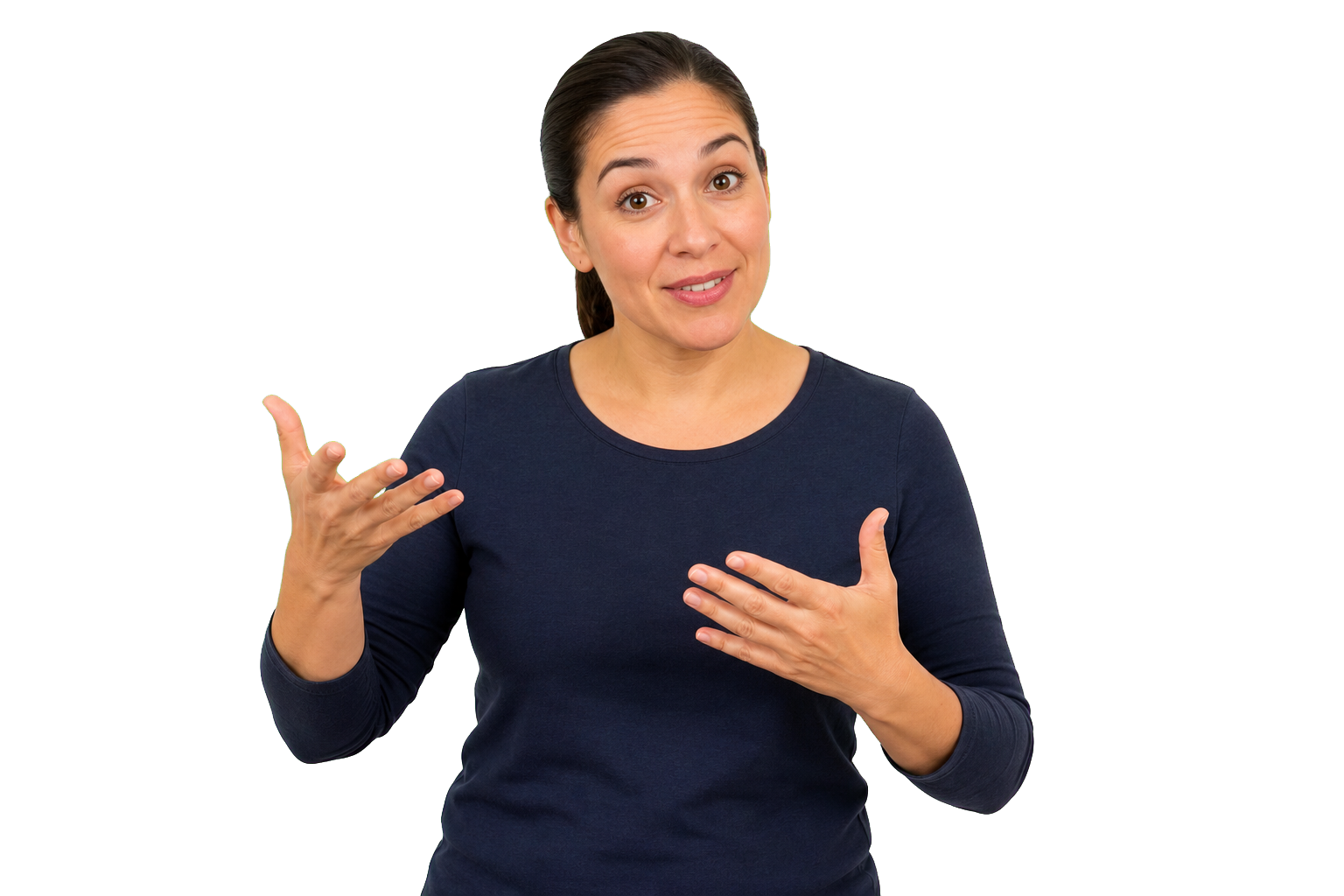
Learn It
Start with the simple version, then practice it with real signs.
In ASL, your hands carry many of the signs, but your face helps show how the sentence should be understood.
Eyebrows, eyes, head position, and body lean can change a sentence from a plain statement into a question.
Think of facial grammar like the tone of voice in spoken English. It is not decoration. It is part of the message.
Try It
Practice slowly. Make the face before the sentence is over.
- Sign YOU GO with a neutral face. That means "You are going."
- Sign YOU GO again with raised eyebrows and a slight forward lean. Now it means "Are you going?"
- Watch yourself in a mirror and check that your face changes before your hands finish the sentence.
Simple Examples
Read the ASL line first, then check the meaning and face cue.
YOU GO.You are going.Neutral face makes this a statement.YOU GO?Are you going?Raised eyebrows make this a yes/no question.Common Mistake
Do not sign with a blank face all the time. A blank face can make questions and emotions hard to read.
A little more grammar
The PDF calls this a syntactic engine. In simpler words, the face helps run the grammar of the sentence while the hands show the main signs.