
Headnod Affirmation
A headnod can confirm a statement, answer yes, or show that the signer is strongly affirming the idea.
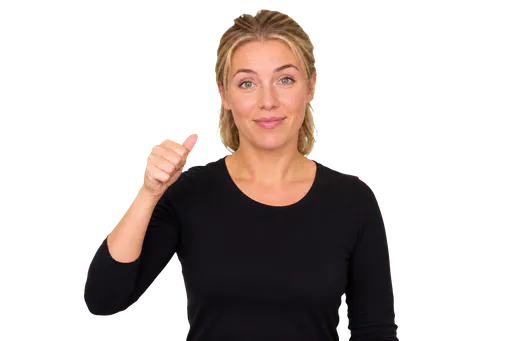
Watch First
Use these short PocketSign clips to see the movement before you practice.
Here are some examples. Yes, that is a non-manual marker that is understood universally as affirmation. No, no. The head shake is a universal known gesture for no. The non-manual marker of happiness is a smiling mouth and brightening eyes to enhance that you are happy. Confused. A frowned eyebrow and a perplexed facial expression enhance the sign for confused.
Learn It
Start with the simple version, then practice it with real signs.
A headnod is the positive partner to the headshake.
Use a small up-and-down nod to confirm yes, true, correct, or I agree.
The nod can happen with the sign YES, but it can also support a whole positive statement.
Keep the nod natural. It should look like clear confirmation, not a huge bounce.
A headnod is especially useful when you want the viewer to know you are sure.
Practice changing only the head movement: calm face, headnod, then headshake.
Try It
Practice slowly. Make the face before the sentence is over.
- Sign with a small headnod.
- Sign with a small headnod.
- Sign with a small headnod.
- Sign with a small headnod.
- Sign with a small headnod.
- Sign with a small headnod, then sign with a headshake and feel the contrast.
Simple Examples
Read the ASL line first. A dark green pill names what your face or head is doing.
Common Mistake
Do not use a headnod for negation. A nod and a headshake point in opposite directions, so mixing them can make the sentence confusing.
A little more grammar
The technical source calls this affirmation. In beginner language, it means your head can help assert that the sentence is true, much like a strong yes in spoken English.