
Face and Hands Together
The face or head movement must happen at the same time as the signs it changes. Timing is the grammar.
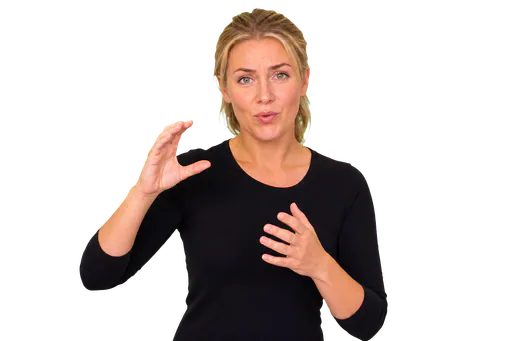
Watch First
Use these short PocketSign clips to see the movement before you practice.
Facial expressions, head movement, and body language are all non-manual markers that we use in ASL while we are signing. These signals add emotion and clarity to our signs.
Examples on how a head shake can negate the meaning. For the sign like, like, this means you like something, but if you don't like something, you can shake your head. Or want, to add a head shake for don't want, or you can sign don't want, don't want.
Learn It
Start with the simple version, then practice it with real signs.
In ASL, the face and hands are read at the same time.
If your face starts late, drops early, or appears after the sentence, the meaning can become unclear.
For negation, start the headshake before the negative part is over and keep it through the signs it changes.
For affirmation, use the nod while you sign the idea you are confirming.
Beginners often sign the hands first and remember the face at the end. Slow down so both channels start together.
The easiest drill is to choose a tiny sentence and repeat it three ways: calm, headnod, headshake.
Try It
Practice slowly. Make the face before the sentence is over.
- Sign with a headshake during .
- Sign with a headshake during .
- Sign with a headshake through .
- Sign with a headnod during .
- Sign with a headnod during .
- Record one positive and one negative version. Watch whether the head movement lines up with the signs.
Simple Examples
Read the ASL line first. A dark green pill names what your face or head is doing.
Common Mistake
Do not finish the signs and then add a quick headshake or nod. In ASL, that can look like a separate reaction instead of part of the sentence.
A little more grammar
The reference document says non-manual behaviors must occur simultaneously with the signs they modify. Put simply: the timing tells the viewer what part of the sentence is negative or affirmed.