
Headshake Negation
In ASL, a side-to-side headshake with a clear negative face can make a sentence mean not, no, or do not.
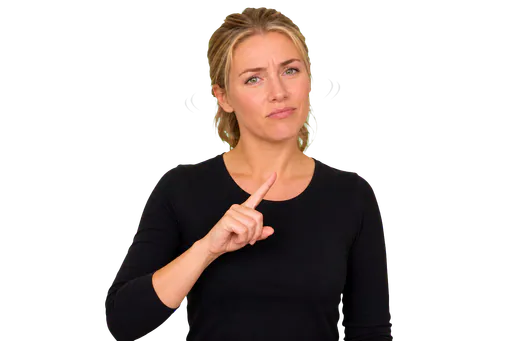
Watch First
Use these short PocketSign clips to see the movement before you practice.
Using facial expressions, head movement, and body language as non-manual markers, we can change the meanings of signs. Negation. Adding a head shake to the sign can negate the meaning.
Examples on how a head shake can negate the meaning. For the sign like, like, this means you like something, but if you don't like something, you can shake your head. Or want, to add a head shake for don't want, or you can sign don't want, don't want.
Learn It
Start with the simple version, then practice it with real signs.
A headshake is one of the clearest ways to show negation in ASL.
The head moves side to side while the face looks negative, usually with a small frown or furrow.
The movement does not need to be huge. It should be clear enough to see and easy enough to hold while your hands sign.
Practice the positive version first, then sign the same idea again with a headshake.
If your hands say LIKE and your head shakes no at the same time, the meaning can become do not like.
For beginners, think: hands show the action, headshake changes the action to negative.
Try It
Practice slowly. Make the face before the sentence is over.
- Sign with a calm face. Then sign with a headshake.
- Sign with a calm face. Then sign with a headshake.
- Sign with a calm face. Then sign with a headshake.
- Sign with a calm face. Then sign with a headshake.
- Sign with a calm face. Then sign with a headshake.
- Sign with a calm face. Then sign with a headshake.
Simple Examples
Read the ASL line first. A dark green pill names what your face or head is doing.
Common Mistake
Do not add the headshake only after the signs are finished. If the headshake comes too late, the viewer may read the signs as positive first.
A little more grammar
The technical source explains that ASL can mark negation without a separate manual sign like NOT. The useful beginner rule is simple: the headshake must cover the signs you are making negative.