
Negative Signs and Emphasis
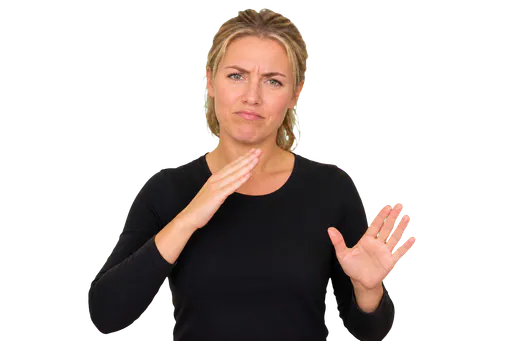
Manual negative signs like NOT, CAN'T, DON'T-WANT, and DON'T-KNOW are stronger when the negative face stays with them.
Watch First
Use these short PocketSign clips to see the movement before you practice.
Examples on how a head shake can negate the meaning. For the sign like, like, this means you like something, but if you don't like something, you can shake your head. Or want, to add a head shake for don't want, or you can sign don't want, don't want.
Learn It
Start with the simple version, then practice it with real signs.
ASL can use manual negative signs, such as NOT, CAN'T, DON'T-WANT, and DON'T-KNOW.
The headshake still matters. The face and head are not optional decorations.
Sometimes a negative sign appears near the end of a sentence for emphasis.
When the negative idea covers the whole sentence, keep the headshake active across the whole negative part.
For a beginner, do not worry about fancy grammar names. Ask: what part am I making negative?
If the whole idea is negative, let the headshake cover the whole idea.
Try It
Practice slowly. Make the face before the sentence is over.
- Sign with a headshake.
- Sign with a headshake through .
- Sign with a headshake during .
- Sign with a headshake through .
- Sign , , with a headshake across the whole negative idea.
- Try the same winter sentence with the headshake only at the end. Notice how unclear it feels.
Simple Examples
Read the ASL line first. A dark green pill names what your face or head is doing.
Common Mistake
Do not save the headshake for only the final NOT or DON'T-LIKE sign when the whole sentence is negative. The viewer needs to see the negative scope as the sentence unfolds.
A little more grammar
The source document describes this as negation scope. If there is no manual negative sign, the headshake often needs to spread over the whole verb phrase. If a negative sign is placed at the end for emphasis, keep the headshake active over the full negative idea.