
Yes/No Questions
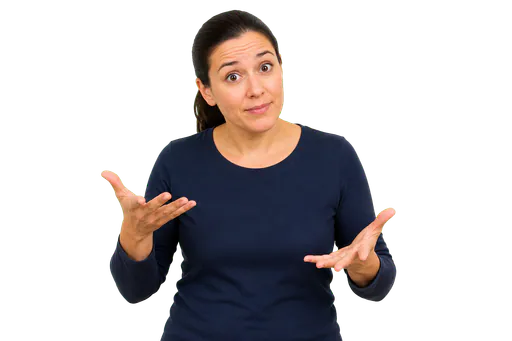
For ASL yes/no questions, raise your eyebrows, open your eyes a bit, and lean your head forward slightly so a yes or no answer feels expected.
Watch First
Use these short PocketSign clips to see the movement before you practice.
Using facial expressions with ASL is very important. When you're asking yes or no questions, you want to make sure your eyebrows are up. When you're asking any WH questions such as who, what, when, where, why, or how, you want to make sure you lower your eyebrows.
For yes or no questions, you want to raise your eyebrows to give a simple answer of yes or no, like opening a door for a quick response.
Learn It
Start with the simple version, then practice it with real signs.
Yes/no questions are also called polar questions. That just means the answer can be yes or no.
In ASL, the yes/no question face is a non-manual marker. Your hands sign the idea, while your eyebrows, eyes, and head position show that you are asking.
Use raised eyebrows, wider eyes, and a slight forward head tilt.
Start the raised eyebrows as the question begins, or just before the main signs. The viewer should see the question face while the signs are happening.
Hold that face through the question, not just on the last sign.
Keep the sentence short while you practice. Simple ASL yes/no questions are a good place to build the habit because the face stays the same from start to finish.
You usually do not need a separate sign for question. The raised eyebrows and forward head position already tell the viewer that you want a yes or no answer.
After the question is finished, relax your face and wait for the answer. That small release helps the question feel complete.
Try It
Practice slowly. Make the face before the sentence is over.
- Ask ? with raised eyebrows.
- Ask ? with raised eyebrows.
- Ask ? with raised eyebrows.
- Ask ? with raised eyebrows and a small forward head lean.
- Ask ? with raised eyebrows held through both signs.
- Ask ? with raised eyebrows from through .
- Ask ? with raised eyebrows held through the whole question.
- Practice each question twice: first too late with the face only at the end, then correctly with the face held through the question.
- Answer your own questions with or so the pattern feels complete.
Simple Examples
Read the ASL line first. A dark green pill names what your face or head is doing.
Common Mistake
Do not furrow your eyebrows for a yes/no question. Furrowed eyebrows usually point toward a WH question, so the viewer may expect information like who, what, where, when, why, or how. Another common beginner mistake is saving the raised eyebrows for only the final sign. If the face arrives late, the first part of the sentence can look like a statement before it suddenly turns into a question.
A little more grammar
In ASL grammar, yes/no questions are marked across the sentence by the face and head, not only by punctuation at the end. Raised eyebrows, slightly wider eyes, and a small forward head position work together as one signal. For learners, the practical goal is timing: make the question face visible during the signs that belong to the question. This is why a short sentence like YOU WANT WATER? is excellent practice. The words are simple, so you can focus on holding the non-manual marker clearly from the beginning of the question until the asking part is finished.